Loose Ends

In making preparations for the move from the U.S. back to Israel, I have many loose ends to tie up. I’ll overlook some for sure…
…That book I keep telling myself I’ve got to read, the cherished family photograph - I’ll forget to put them into my suitcase…I’ll forget to disconnect our phone service…or say goodbye to an old friend before heading out…. I’m bound to miss catching some of those seemingly endless details. ּּּּBeseder/okay, not the end of the world…
Judaism has something to say about loose ends and the need to be reminded.
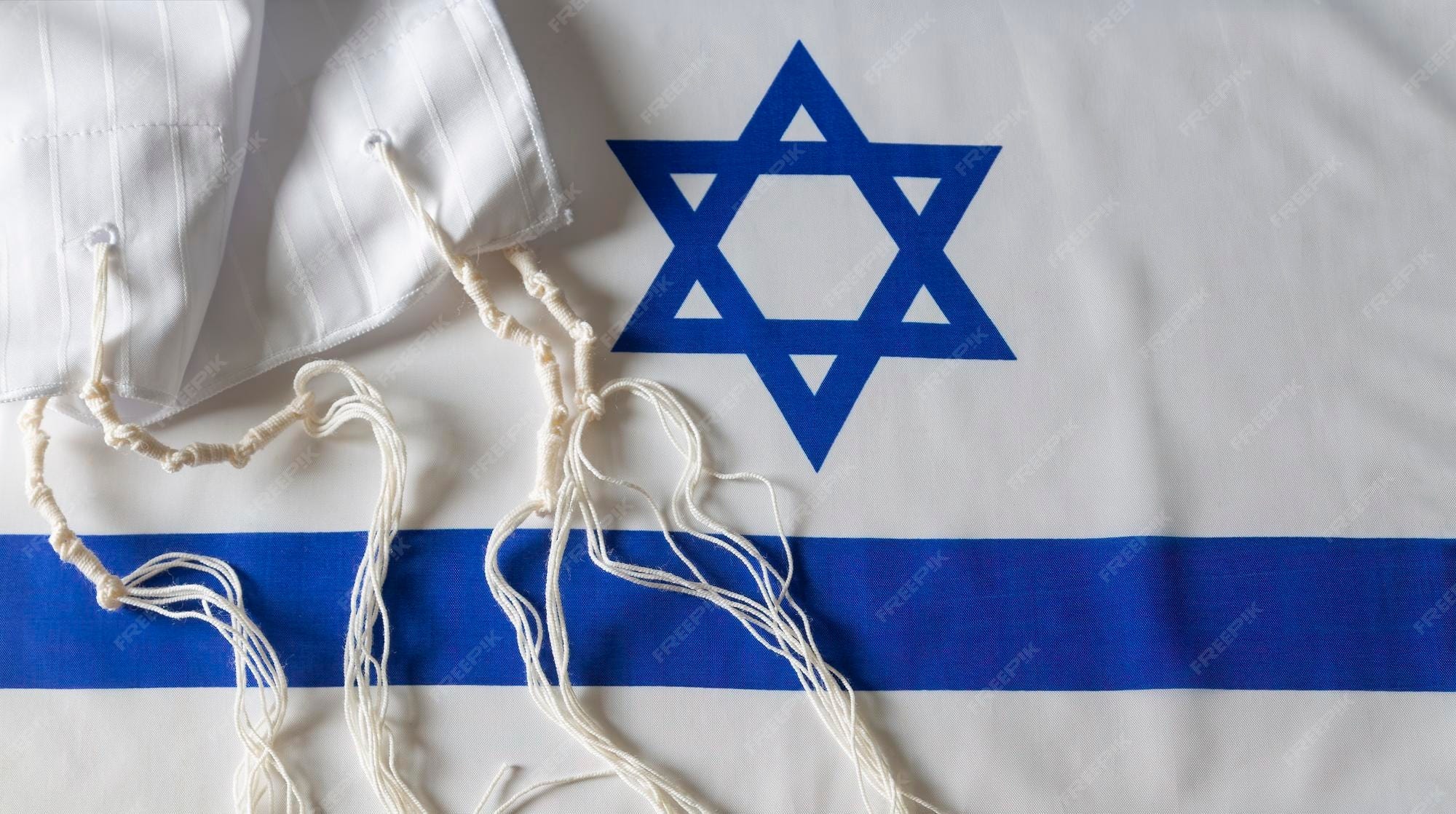
Traditional garb for Jewish men involved a rectangular, poncho-like garment with tzitziyot/fringes hanging loosely from the end of each of its four corners. A tallit, worn - nowadays by women too - during prayers, follows the same pattern. (I wrote on the subject in “Tattered Tallit, published here on March 8, 2023.)
Following a ritual macramé design that carries symbolic meaning, tzitziyot prompt us to observe mitzvot/commandments outlined in the Torah. Instead of letting those fringes get lost in the shuffle, we wrap them around our fingers as one does with a string to jog the memory: “….It will be a tzitzit/fringe for you. You will see it and recall all of God’s mitzvot/commandments” (Numbers 15:39). Wearing tzitziyot is itself a mitzvah!
They have a second mnemonic function as well: to remind Jews that we’re a “fringe” element, outliers, our relationship with our surroundings often tenuous. For, tzitziyot are situated as far apart from each other as is geometrically possible - like Jews dispersed north, west, south and east - in all directions across the world map. To the ends of the earth we’ve gone; our sense of confidence about whether we’ll survive for long as aliens in all those foreign outposts is, to put it mildly, loose.
But we have a home to which we can return.
During morning prayers, the practice is to gather together those four corner tzitziyot, wrap them around one finger, and hold them to the forehead while reciting Shema: “Hear, Israel, YHVH is our God, YHVH is one” (Deuteronomy 6:4).
The physical gesture of drawing tzitziyot together metaphorically expresses a signal hope, which the tail end of the preceding blessing cues us about: “Bring us to shalom from the four corners of the earth and lead us upright to our land….You have drawn us near to Your great name, forever in truth to thank you and in love declare Your unity.” In returning to eretz yisrael, I am taking action that the prayer symbolically enjoins upon Jews.
God’s unity and the Jewish people’s convergence - our reintegration as nation - go hand in hand. Diffuse elements of my life that were searching for a sense of shared purpose and shelemut/wholeness, loose ends in need of a binding principle, found there their needed unifying motif: sacred connection in Jewish peoplehood.
Working as a rabbi in America helped me understand the difficulty, for Jews, of being on the outskirts. I served small synagogues in towns or neighborhoods where Jews were few and far between and a sense of togetherness hard to achieve. Yet, I took comfort from the tallit’s symbolism, which emphasizes the value of joining with kindred spirits, all of us living on the edge. Holy Scripture says as much.
At the same time as he tells Israel that they are a “nation treasured” by God, Moshe also points out to them that they are, in number, a mere smattering: “the fewest of all nations” (Deuteronomy 7:6, 7). Vulnerable. Exposed. At risk.
It’s true; there are not very many Jews, and we are incessant targets of abuse (which fact does not absolve us if we turn abusive). Our marginal condition, with its attendant dangers, required us to evolve peripheral vision so we could understand risk factors looming around us while we looked straight ahead, never averting our gaze from urgent challenges that lay ahead but with which came blessed opportunities.
Strength is not always in numbers but grows with commitment to coalesce - however few you are in number - around what you have in common, what you hold as sacred, priorities around which you can unite. Jews’ outsider and minority perspective allows for empathy with other “others” living on the fringes of mainstream society, beyond the pale (ivri/“Hebrew” is related to me’ever/“beyond”). We should bond with those kindred souls: the ignored, the neglected, the despised, and the dispossessed.
Jews don’t have to tie up - into neat, concise packages of politically correct jargon - the loose ends of our historic struggle for dignity and livelihood. What’s unresolved in our experience betokens how Jewish commitment to tzedek/justice and rachamim/compassion is not only indefatigable but open-ended, seeking to pull more and more souls into the embrace of gemilut chasadim / actions of lovingkindness, and help heal the human race and make our world whole.
Understanding this can be empowering, liberating. In studying to become a rabbi, I learned that the Torah’s command to wear tzitziyot arose from a significant custom in the ancient Near East. Such apparel was a uniform worn by free men. That precedent migrated into Biblical culture: Israelites imitated the sartorial habit to make clear that they too were free. As I mentioned, Jewish women along with men today carry on the tradition.
Freedom is a work in progress. We won’t resolve all uncertainties; we’ll need time and practice - with plenty of loose ends, oversights, and errors along the way - to make our move from exile to home. But with patience and cooperation, we can make it there.
I’m fine with loose ends. They remind me of holy work yet to be done.

Thanks, Josh.
If you want to reach me try Zimmerberg@gmail.com
Trying to connect