No → Maybe →Yes!

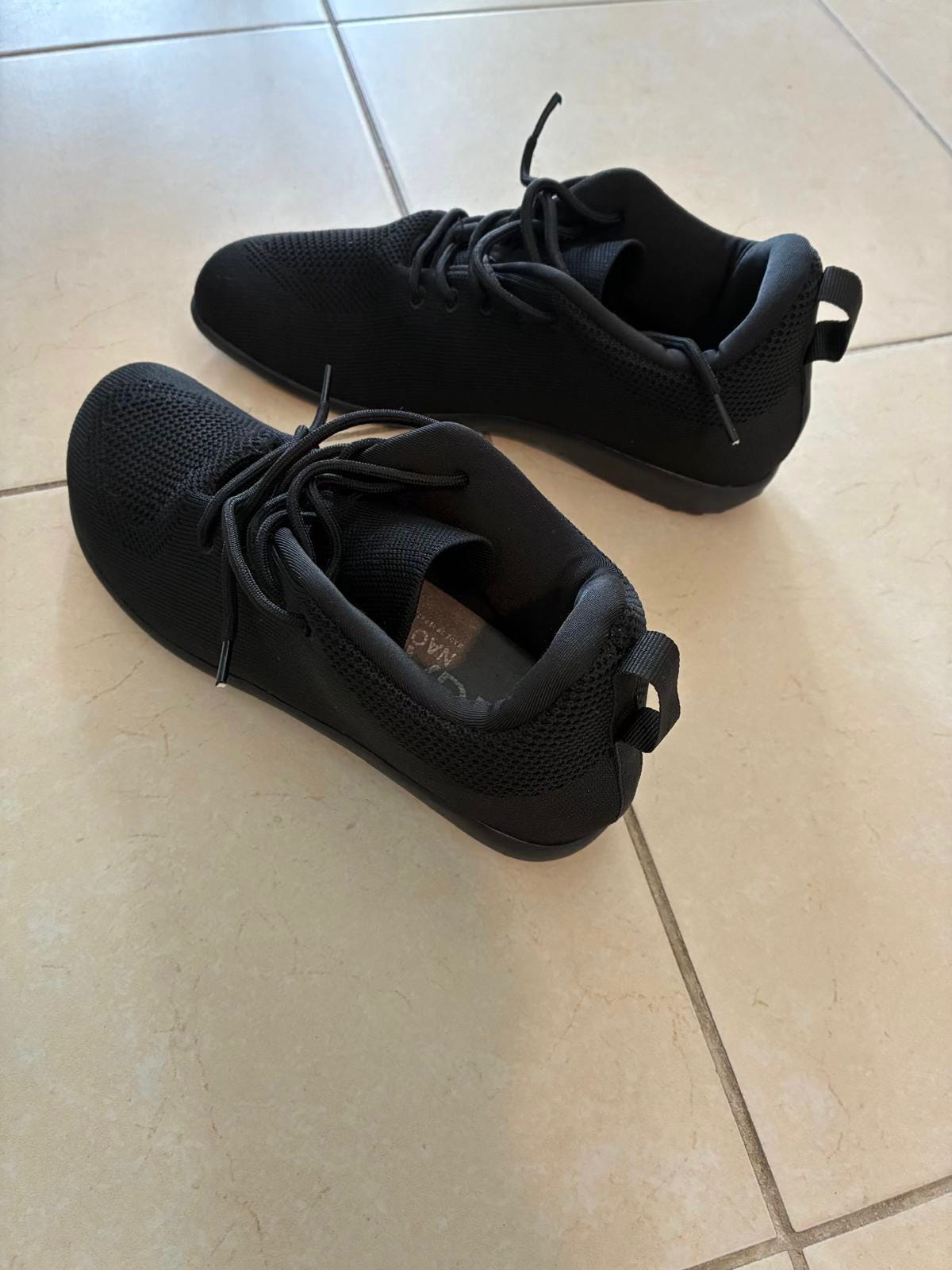
Last week, while checking out an Israeli shoe company online, I discovered there’s a store outlet for that business right here in town, so I called and spoke with an employee there. She told me that the particular model I’m looking for - a vegan walking shoe - wasn’t in stock but advised me to come to the store next day, speak to the manager, and look through the catalog to make an order.
When I got there, the first thing the friendly manager - repeating what his associate had told me on the phone the day before - said no such brand was in stock; definitely not there.
I named my approximate shoe size (I had done my homework and translated my U.S. shoe size into the Israeli one), showed him a picture I had taken of the shoe that interested me, and (as per the earlier phone advice) offered to locate it in the catalog. Instead of bringing me the catalog, he looked carefully at the picture, hemmed and hawed a bit, did some brief research, told me he might have available something similar in a slightly smaller size, and went to look for it.
He found it; I tried it on. It wasn’t a perfect fit but might work. While I was telling the manager this, he went back into the stock room and - eureka! - brought out a pair of the same brand in the size I had named. This shoe fit perfectly. I bought two pairs.
Israeli social interactions often follow this scenario.
You ask for help; the first thing people do is say they can’t help you. You repeat your request; your persistence starts to pay off. Unresponsiveness gives way to investigation, negation to validation, frustration to hopefulness. The attitude shifts from “there’s nothing I can do for you” to “let me take a look and see what I might be able to do” to “maybe this can help?” Movement by fits and starts from the impossible to the viable. I experience that pattern in my dealings with stores, banks, hospitals, and government here.
Informally coming up with solutions to seemingly intractable problems seems to be the Israeli way.
I think it’s rooted (history echoing myth) in an ancient and modern Jewish inclination: At the sea’s edge, Pharaoh’s army rushing toward you, you predict doom - when all of a sudden the waters part and you escape on dry land. In 1948 and 1967, you’re outnumbered and outgunned by enemies preparing to wipe you out - you defeat them.
Refusing to take “no” for an answer - not letting the presumed likelihood of failure stop us from succeeding, not caving to expected defeat - is integral to our character. Which reminds me of an old (admittedly, chauvinistic) American Jewish joke…
When informed that a flood will inundate the world in exactly seven days, people congregate in their places of worship. A Catholic priest tells his flock to confess their sins and prepare to meet their Maker. A Protestant minister tells his parishioners that divine judgment is upon them so they should sear their souls and throw themselves on God’s mercy in hope of being spared an afterlife of hellfire. A rabbi informs his congregation that they have exactly seven days to learn how to live underwater.
Word is that Israel is doomed. Antizionists have been mouthing this mantra for decades, but Israeli analysts and pundits - pointing to political corruption, military debacles, and surging emigration, all these things seen as indicative of a nation on the path to disintegration - are now expressing the same concern. At the same time, Israeli optimists - I unapologetically among them - push back loudly.
There are around 16 million Jews in the world today, this number lower than the roughly 16.6 million Jews who were alive in 1939, on the eve of the Shoah1. We’re always underwater, and yet we keep breathing, learning how to thrive under precarious circumstances.
Maybe, just maybe, a reason for Jews’ persistent survival in the face of horrible odds is our refusal to take “no” for an answer, our willingness to persist until we find what we were looking for - the solution to our problem, the missing link, the shoe that fits - and instinctively knew was there all along.
If we truly are am olam / an eternal people, a big part of what makes us so is our determination to find that pair of shoes, put them on our feet, and walk upon the pathways of life.