Pork? Ham? Bacon?
a "kosher-style" autobiographical note

I grew up in a liberal American Jewish household where religious commitment and secular license interacted comfortably. Participating fully in the nation’s civic life, my parents were just as proud of their Jewish heritage and determined to make my brothers and me feel at home in it.
We observed some key rituals and customs: reciting Shabbos blessings with candles and wine, kindling Chanukah lights, celebrating a Passover seder. I remember myself perched on one arm, a brother on the other, of a comfortable, thick green leather armchair in our living room in State College, Pennsylvania, my father sitting between us and holding open a primer from which he had us practice the Alef-Beys (Ashkenazic pronunciation of Hebrew alphabet).
Donning a yarmulke, I would walk the three or so blocks from our home to Hillel House, where I enthusiastically sang along with college students in a lively service to welcome the Sabbath. An oneg shabbat (reception with desserts) followed services. I drank tea, swallowed entire wedges of lemon, gobbled down deliciously chewy cookies, and ran around the place. The lobby walls featured vivid murals and paintings depicting events and personages from Jewish history.
When we moved to Milwaukee in 1964 right before my 11th birthday, my mother cautioned me not to wear my yarmulke in public. She worried. Her warning puzzled me. What was she afraid of? I had only a vague sense of it.
I remembered hearing something very different, during our time in Innsbruck, Austria three years earlier, when neo-Nazis desecrated the Jewish cemetery and made antisemitic threats. My parents took us to the synagogue on Shabbos eve to show solidarity with fellow Jews, a tiny remnant of the city’s ancient, always imperiled community that had suffered grievously during the Holocaust.
Although a mere eight years old at the time, I got the message: If enemies menace us, we don’t shrink away but show solidarity as a Jewish community and confront the danger head-on. So now, in the safety of the United States with hatred of Jews on the ebb, why would my mom worry?
She otherwise proudly and openly affirmed Jewish identity and values. My father, too, was vocally devoted to them. A political scientist, he wove into his teaching and writing emphasis on the importance our Biblical Prophetic tradition has for developing enlightened public policy and fostering peaceful international relations. Ethical, more than ritual, facets of Jewish experience predominated in my parents’ approach.
We did not keep kosher. And yet in a weird way we did.
Pork never once (to my recollection) graced our refrigerator shelf. Well, yes and no.
All ham is pork, but not all pork is ham. And not all kinds of ham are alike. When my mom went shopping, she often picked up little packages of ham that came in thin pale pink strips that tasted dry and boring. I had tasted better. I remember hearing about pork and wondering what it was all about.
It carried an ominous mystique. When I finally did get a taste, it was delicious! Why were pork and good-tasting ham absent from our kitchen?
A partial explanation came to me by way of deductive reasoning that factored in rules of kashrut I was picking up from observing the customs of more ritually observant relatives and families and from studying the surrounding American-Jewish cultural milieu. Whether it tastes good or not, pig-derived flesh is treyf (not kosher).
So, just as a woman can’t be slightly pregnant, food can’t be slightly kosher but is either kosher or not – but not so fast…
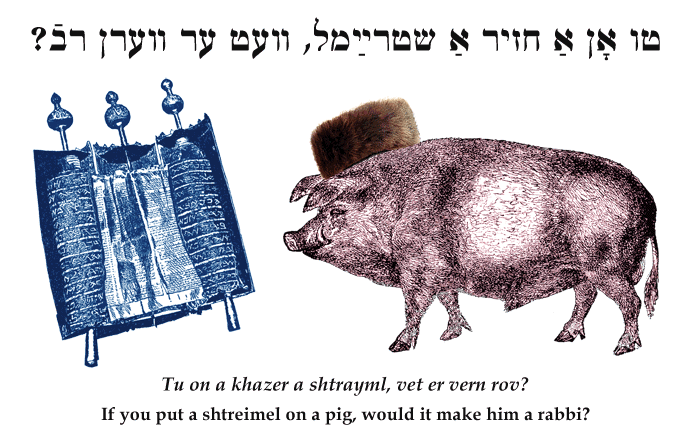
I realized that, in the minds of both religious and secular Jews, there are gradations of kosher as of treyf. The so-called “kosher-style” delicatessen isn’t a kosher establishment but offers kosher products along with treyf ones; and kosher ingredients prepared with treyf ones or prepared in a treyf manner. In my parents’ construct of Jewish dietary rules, pork was decidedly treyf, ham (especially of the dry, boring kind) less so. How about bacon?
A couple of crisp bacon strips next to your scrambled eggs? Indescribably scrumptious. So, even though we all knew bacon’s as treyf as roadkill, we “pretended” it was kosher. Demands of palate can scramble, obfuscate, exigencies of law. Or, as Resh Lakish (3rd century CE Amora/Talmudist) drolly put it, “Sometimes, abrogation of the Torah is its confirmation” (Babylonian Talmud, Tractate Menachot 99).
Fudging of legal categories can have a mollifying effect on the Jewish conscience. Secular, religious – must the difference be set in stone?
I no longer eat meat. Still, the kashrut conundrum – bemusement over what’s kosher or not – lingers as does uncertainty over how a Jew acculturated to a non-Jewish world should behave.
I’m grateful for my early exposure to American culture. That formative contact taught me to think carefully about Jewish-Gentile relations, the line between yours and mine, and ways to bridge differences without blurring boundaries.
(https://www.yiddishwit.com/pics/pig-rabbi.png)