Where are the Jackals?

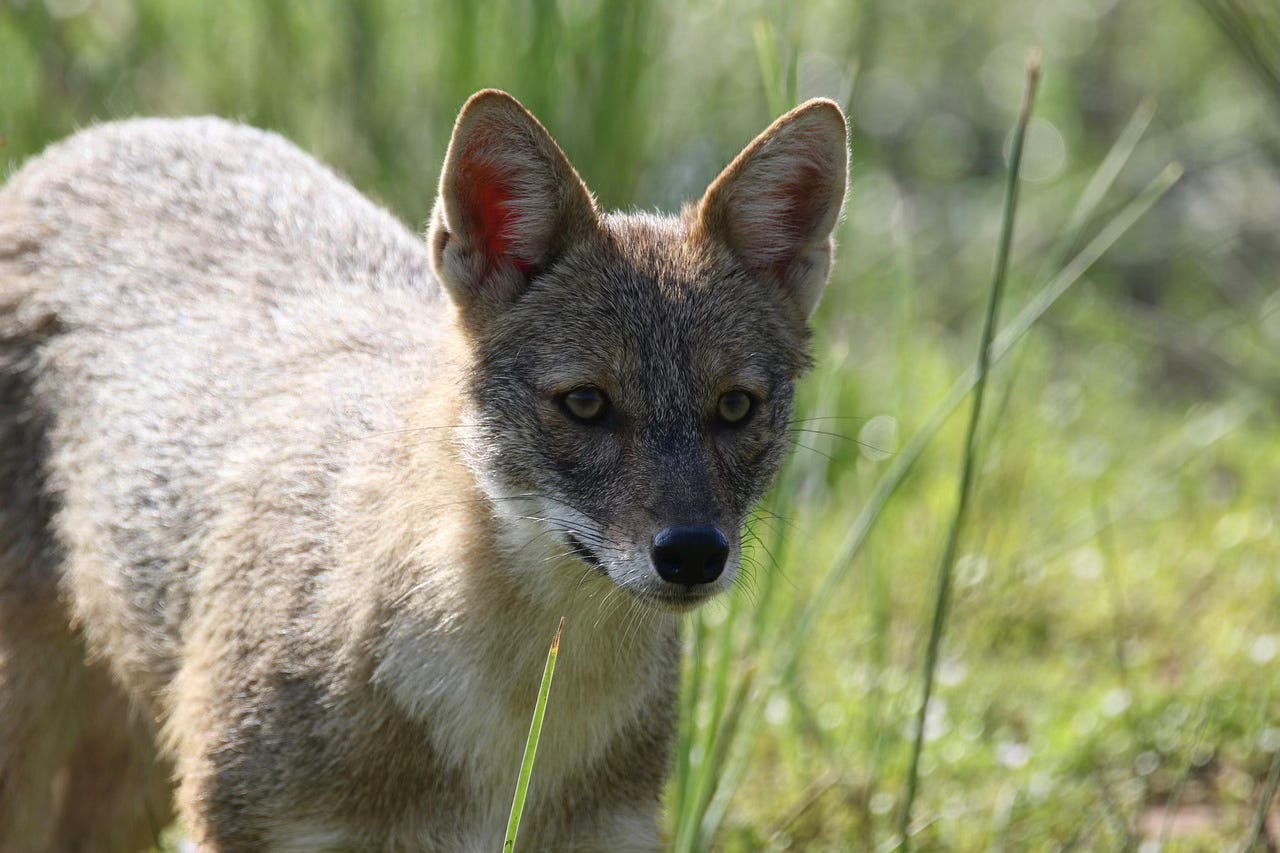
Jackals1 who were a regular part of my night life here with Martha in Zikhron Yaakov have gone silent. If still around, they’re keeping a low profile.
In the middle of the night, their haunting howls would rise up from an area of dense vegetation down below, just a stone’s throw from us, and reach across the darkness through our bedroom window as we slept. Instead of finding the chorus of yaps and yowls irritating, we felt it a blessing and thought ourselves privileged recipients of a gift from nature and God.
Occasionally, an agonized shriek would rise up; we speculated it was from a cat who’d met a grim fate after having strayed into the enclosure where jackals lay in wait for prey.
We’re wondering if they’ve left the neighborhood. I’m worried some municipal agency saw fit to clear them out or kill them off. Did the war, with its sirens and missiles, scare the creatures away? (My cursory research hasn’t yielded confirmation of these suspicions or, for that matter, any information on the subject.)
The jackal - referred to as shu’al (the term also, and nowadays only, meaning “fox”) or tan - carries symbolic resonance in Judaism. Biblical references connote desolation and abandonment: “Like shu’alim among ruins have your prophets been, Israel!” (Ezekiel 13:4); “I have made his mountains a wasteland, his inheritance a wilderness for tanot” (Malachi 1:3).
Warning of Jerusalem’s razing as punishment for the Jewish people’s idolatrous, corrupt ways, God threatens: “I will turn Yerushalayim to rubble, a lair of tanim” (Jeremiah 9:10). Their presence reminds us of our past national humiliation and history of exile.
Yet there’s another way to think about the jackal. While walking on Har haTzofim / Mount Scopus and looking down on the Temple’s ruins, Rabbi Akiva (1st-2nd centuries CE) and three rabbinic friends of his spy shu’alim emerging from a pile of debris that had been the Holy of Holies. The other sages cry, but Akiva laughs.
“What are you laughing about?” they ask. He responds, “What are you crying about?”
Akiva comforts them by reminding them of two prophecies, the second following from and predicated upon the first. The first predicted the Jewish kingdom’s destruction (thus, the land reduced to uncultivated turf where creatures run wild). The second foresaw restoration of Jewish life in rebuilt Jerusalem. (Babylonian Talmud, Tractate Makkot 24a:33; 24b:2-4)
The appearance of shu’alim in the Holy Temple’s wreckage serves, Akiva explains, as harbinger of our people’s eventual redemption.
I too looked down from Har haTzofim upon the Temple site in the Old City. This was in 1990 during a period of study as I was preparing for the rabbinate. My family and I were high up on a tower at Hebrew University. It was during the first intifada. We heard shouts and the noise of violent clashes.
These days, in the precinct of Kotel haMa’aravi / the Western Wall, Jewish extremists are verbally abusing and physically attacking others Jews - women and men who want to pray together on an egalitarian, gender-inclusive basis. Conflict between Israelis and Palestinians and among Jews aside, I see the jackal as a sign of hope.
I’m not referring to the sighting, on Tisha be’Av / 9 Av in July of 2023, of a shu’al (in this case fox rather than jackal) near the Temple Mount2, a circumstance that aroused messianic speculation among religious zealots craving any hint of a Time of Redemption close at hand.
Nor do I mean Franz Kafka’s depiction, in his strange, perverse tale “Jackals and Arabs,” of jackals’ ritual purity obsession based, paradoxically, on instinctive craving for carrion. These jackals beg a traveler “from the north” to please liberate them by murdering their oppressive Arab masters, whose custom of killing animals for food the jackals find repugnant3.
In my book redemption has nothing to do with the Messianic concept of a savior figure who violently routs our enemies and restores our fortunes. For me, jackals betoken redemption just by being part of the physical landscape of eretz yisrael.
From there, they enter Israel’s imaginative landscape. I find redemptive potential in how the jackal weaves into threads of song, such as from this line of the serene Israeli classic “Erev Ba / Evening is Coming”: “…vecharchek ba’emek ha’afel melaveh hatan et bo haleyl / and far away in the dark valley, the jackal accompanies the coming of night….4”
Jackals, your haunting nocturnal wail was a sweet sound that wove in and out of my dreams and comforted, reassured me as I lay wrapped in a blanket of darkness. Aroused and half-waking, I listened to your baying call, which helped me remember that I am where I belong. And back to sleep…
Where are the jackals? I want them back!
(https://pixabay.com/images/download/ornaw-animal-7870531_1920.jpg)

https://www.kafka-online.info/jackals-and-arabs-page3.html
lyrics by Oded Avishar (melody by Arieh Levanon)